
Hume Health Smart Wellness Technology: A Practical Guide to Body Composition and Health Tracking
A number on the weighing scale tells only part of the story. It does not show how much of your body weight comes from fat, muscle, or water, nor does it reveal patterns in your sleep or daily activity. If you want to understand how your lifestyle habits relate to your overall wellness, tracking a broader range of health metrics can offer a more complete perspective.
Smart health monitoring technology makes it easier to collect and review these measurements over time. Instead of relying on a single reading, you can observe trends, evaluate changes in your routines, and use the information to guide your fitness and wellness goals.
Hume Health focuses on data-driven wellness tracking, helping users gain more insight into selected body composition and health metrics. This guide explores how Hume Health technology works, the benefits of tracking body composition and other health metrics, and how to use these insights to make informed wellness decisions.
Understanding Hume Health's Approach to Smart Health Monitoring
Hume Health focuses on connected wellness technology that helps users collect, review, and track health-related measurements through digital tools. Its approach centers on making personal health data easier to understand, allowing users to monitor selected metrics and observe changes over time.
The Hume Health app serves as a platform for reviewing measurements collected by compatible devices. Depending on the device and its available features, users can access health-related data, track progress, and review patterns across different aspects of their wellness routines. The app also offers optional premium features, including personalized AI-powered coaching and insights. Feature availability may vary by device and membership level.
Consistent tracking can provide useful context for everyday wellness decisions. Reviewing measurements over time, for example, may help users evaluate their activity habits, observe changes in body composition, or reflect on their sleep routines. However, individual readings can fluctuate, and some measurements are estimates influenced by factors such as hydration, activity, and measurement conditions.
Hume Health's connected approach helps users organize and review selected wellness data in one place. Understanding what these measurements represent, along with their limitations, is essential for interpreting trends and making informed decisions about personal health habits.
How Hume Health Devices Help You Understand Your Body
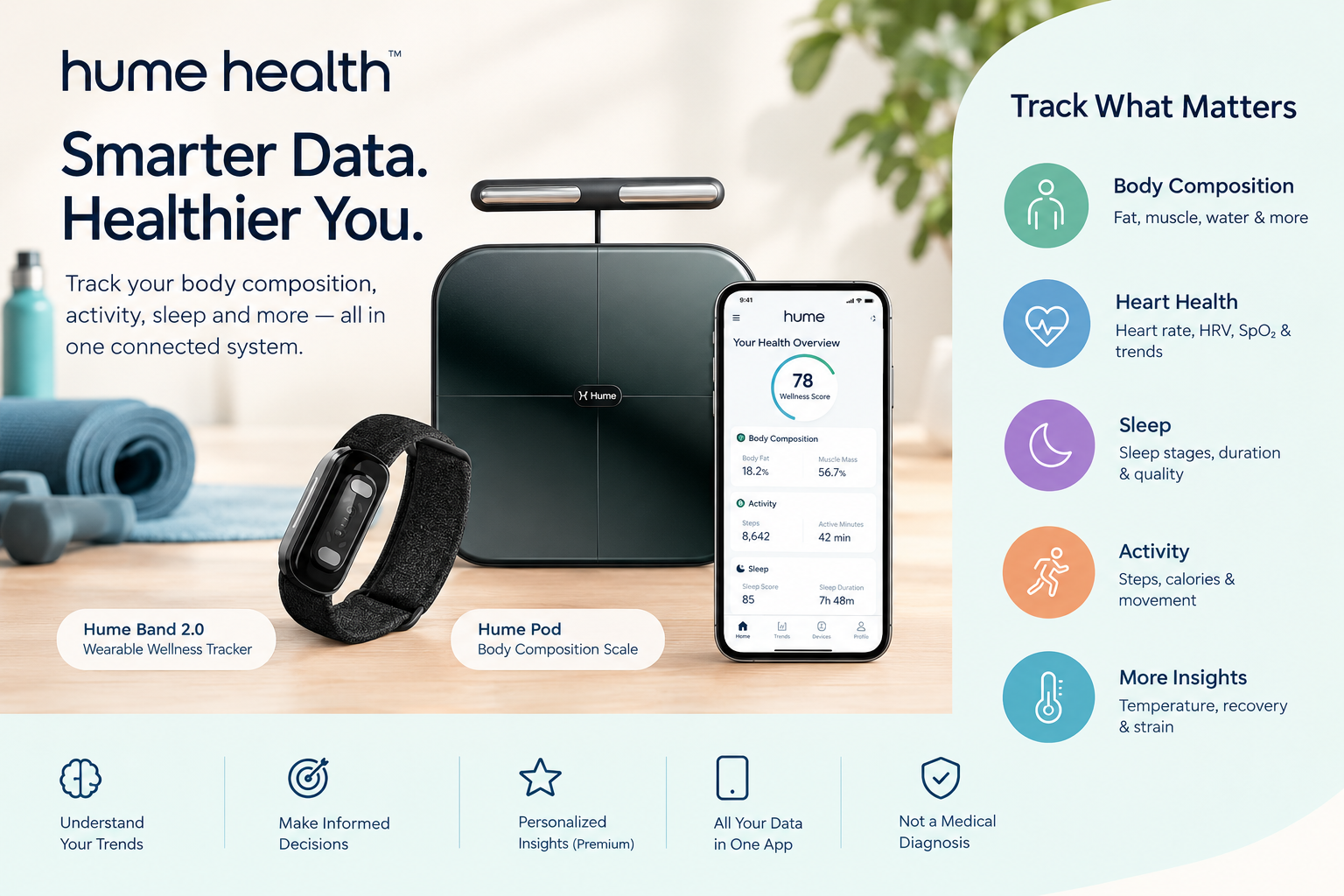
Smart wellness devices can provide different types of information about your body, from estimated body composition to patterns in sleep, activity, and cardiovascular measurements. Hume Health offers connected technology that allows users to review these metrics through its app and monitor changes over time.
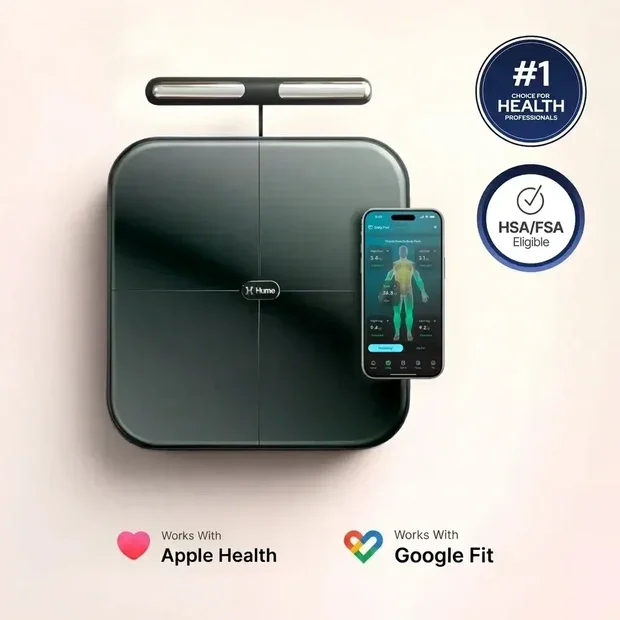
• Hume Pod for Body Composition Tracking: The Hume Pod uses bioelectrical impedance analysis (BIA) to estimate body composition. This method sends a small electrical current through the body and measures the resistance to that current. The resulting measurements are processed using prediction equations to estimate body composition metrics.
According to Hume Health, the Pod uses eight electrodes positioned across the foot platform and hand grips to collect measurements from different body segments. Its reported metrics include body fat, muscle mass, body water, visceral fat estimates, and other body composition indicators. This segmental approach provides estimates for the arms, legs, and torso, offering more detailed information than foot-to-foot measurements alone.
BIA readings can vary with hydration, recent exercise, food intake, and measurement conditions. Following a consistent measurement routine can help users compare results over time, although these readings remain estimates rather than direct measurements of tissue composition.
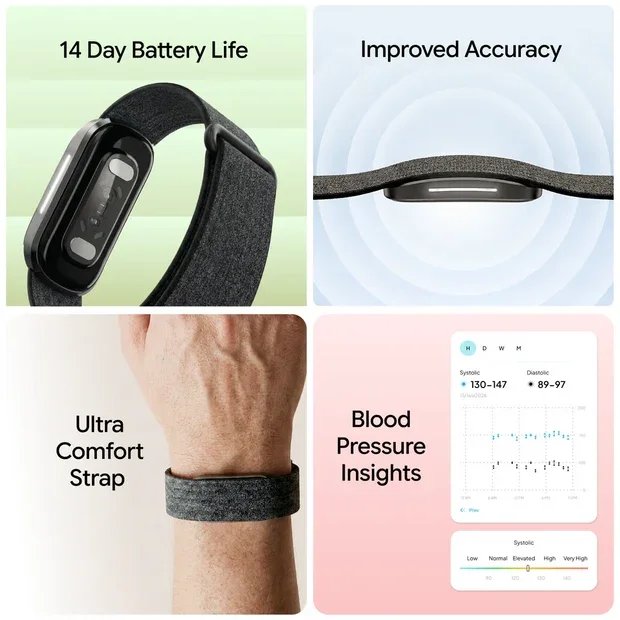
• Hume Band 2.0 for Daily Wellness Tracking: The Hume Band 2.0 is a wearable tracker that monitors several wellness and fitness metrics, including heart rate, heart rate variability (HRV), resting heart rate, blood oxygen saturation (SpO₂), skin temperature, sleep stages, steps, and activity levels. It also provides blood pressure trend insights, along with app-based information related to strain and recovery.
These measurements can help users review patterns in their sleep, activity, and recovery-related metrics over time. Blood pressure trend insights should not be treated as equivalent to readings from a validated blood pressure cuff or used on their own to make medical decisions. Similarly, wearable measurements and algorithm-generated scores provide wellness information, not a medical diagnosis.
• Reviewing Measurements Through the Hume Health App: The Hume Health app brings supported measurements from connected devices together in one place. When used with both the Hume Band 2.0 and Hume Pod, users can review wearable metrics alongside body composition estimates and track changes over time. The available data and insights depend on the connected device and its supported features.
Looking at repeated readings instead of isolated results can provide more context about changes in body composition and daily habits. For meaningful comparisons, users should follow consistent measurement routines and consider factors that may influence individual readings. These insights can support personal wellness tracking, but they should not replace professional medical advice or assessment.
Why Track Body Composition Instead of Just Weight?
Body weight is one useful measurement, but it does not explain what contributes to that weight. Tracking estimated body composition alongside weight can provide additional context about changes in the body over time.
• Understand What the Scale Measures: A weighing scale records total body weight, including fat, muscle, bones, organs, and body water. It cannot show how much each component contributes to the total. Two people with the same weight may have different body compositions, depending on factors such as muscle mass and body fat.
• Distinguish Between Fat and Lean Mass: Body composition devices estimate metrics such as body fat percentage, fat mass, and fat-free mass. These measurements offer additional context when reviewing changes in body weight. Fat-free mass includes muscle, bones, organs, and water, so it should not be interpreted as muscle mass alone.
• Put Weight Changes into Context: A change on the scale does not necessarily indicate a corresponding change in body fat. Weight may fluctuate due to fluid retention, food intake, digestion, and other short-term factors. Reviewing estimated body composition alongside weight can help provide a broader picture, although these estimates also have limitations.
• Account for Hydration-Related Fluctuations: Bioelectrical impedance analysis (BIA), a method used by devices such as the Hume Pod, relies on electrical measurements influenced by body water. Changes in hydration can affect estimates of body fat and fat-free mass. Consistent measurement conditions can make readings easier to compare.
• Focus on Trends, Not Individual Readings: A single measurement offers only a snapshot. Reviewing readings collected under similar conditions over several weeks can help identify patterns and put day-to-day fluctuations into perspective. These trends are estimates, not definitive proof of fat loss, muscle gain, or metabolic changes.
Who Should Consider Hume Health Products?
Hume Health products cater to different wellness tracking needs. Choosing between them depends on whether the goal is to understand body composition, monitor daily activity, or review sleep patterns.
• Fitness Enthusiasts: The Hume Pod estimates body fat, muscle mass, and other body composition metrics. It can complement weight tracking for people monitoring changes during a fitness routine.
• People Building Exercise Habits: The Hume Band 2.0 tracks steps, activity, and heart rate. These measurements can help users understand their daily movement and maintain awareness of their activity levels.
• Users Interested in Sleep Patterns: The Hume Band 2.0 records sleep stages and overnight metrics, including heart rate and blood oxygen saturation (SpO₂). Users can review these readings to learn more about their sleep patterns, keeping in mind that wearable estimates are not medical assessments.
• Households Tracking Body Composition: The Hume Pod supports multiple user profiles, allowing different household members to maintain separate body composition records. Each person can review their own measurements through the app.
People interested in both body composition and wearable wellness metrics can consider using the Hume Pod and Hume Band 2.0 together. Those who need only one type of tracking can choose the device that aligns with their priorities.
How to Get Consistent Readings from Your Hume Health Device
Measurement conditions and device placement can influence the data collected by smart wellness devices. Following a consistent routine can make readings easier to compare over time.
• Establish a Consistent Measurement Routine: For body composition measurements with the Hume Pod, aim to measure at a similar time each day, preferably in the morning after using the bathroom and before eating. Food, fluid intake, exercise, and changes in hydration can affect body weight and bioelectrical impedance analysis (BIA) estimates. Keeping these factors reasonably consistent can help reduce some variation between readings.
• Follow Device-Specific Instructions: Place the Hume Pod on a flat, hard surface, avoiding carpet. Take the measurement with bare feet, hold both handles as instructed, and stand upright while maintaining contact with the sensors. Keep your phone's Bluetooth enabled, select the device in the Hume Health app, and remain in position until the app confirms that the measurement is complete. For the Hume Band 2.0, follow the wearing instructions and adjust the strap so the sensors sit flush against your skin without making the band uncomfortably tight.
• Interpret Trends, Not Isolated Results: Review measurements over several days or weeks to understand how your metrics change over time. Compare readings taken under similar conditions and look for patterns that persist across multiple measurements. For the Hume Band 2.0, consider sleep, activity, and heart rate metrics together instead of relying on a single score to assess your routine. App-generated insights can help organize these observations, but they do not establish a medical diagnosis or confirm a specific health outcome.
Make More Informed Wellness Decisions with Hume Health
Find the right Hume Health device for your wellness goals at Pharmalynk Marketplace. Explore the Hume Pod for body composition tracking or the Hume Band 2.0 for daily activity, sleep, and heart rate monitoring. Review each product's specifications and features to identify the device that best matches your tracking needs.
Explore the Hume Health collection at Pharmalynk Marketplace, compare the available devices, and choose your next wellness tracking companion.
Frequently Asked Questions
• What do Hume Health devices measure?
The Hume Pod estimates body composition metrics, including body fat, muscle mass, and body water. The Hume Band 2.0 tracks wearable metrics such as heart rate, heart rate variability (HRV), sleep stages, steps, and activity levels. The available measurements vary by device.
• How does bioelectrical impedance analysis (BIA) work?
BIA sends a small electrical current through the body and measures the opposition to that current. The device uses these measurements and prediction equations to estimate body composition. Hydration and other factors can influence the results, so the readings are estimates rather than direct measurements of fat or muscle tissue.
• How can I get more consistent body composition readings?
Use the Hume Pod under similar conditions each time, ideally at a similar time of day. Follow the device's instructions for placement, foot contact, and handle positioning. Keeping factors such as recent exercise, meals, and hydration reasonably consistent can make readings easier to compare.
• Do I need the Hume Health app to use these devices?
Yes, the app is needed to access and review the full tracking features. The Hume Pod uses the app to sync and store body composition data, while the Hume Band 2.0 connects with the app to review supported wearable metrics and trends. Some features may require a premium subscription.
• Are Hume Health readings medical diagnoses?
No. The devices provide wellness measurements and estimates, not medical diagnoses. Body composition estimates, wearable readings, and app-generated scores should not be used on their own to diagnose or manage a health condition. Consult a qualified healthcare professional if you have concerns about your health or need a clinical assessment.


A number on the weighing scale tells only part of the story. It does not show how much of your body weight comes from fat, muscle, or water, nor does it reveal patterns in your sleep or daily activity. If you want to understand how your lifestyle habits relate to your overall wellness, tracking a broader range of health metrics can offer a more complete perspective.