
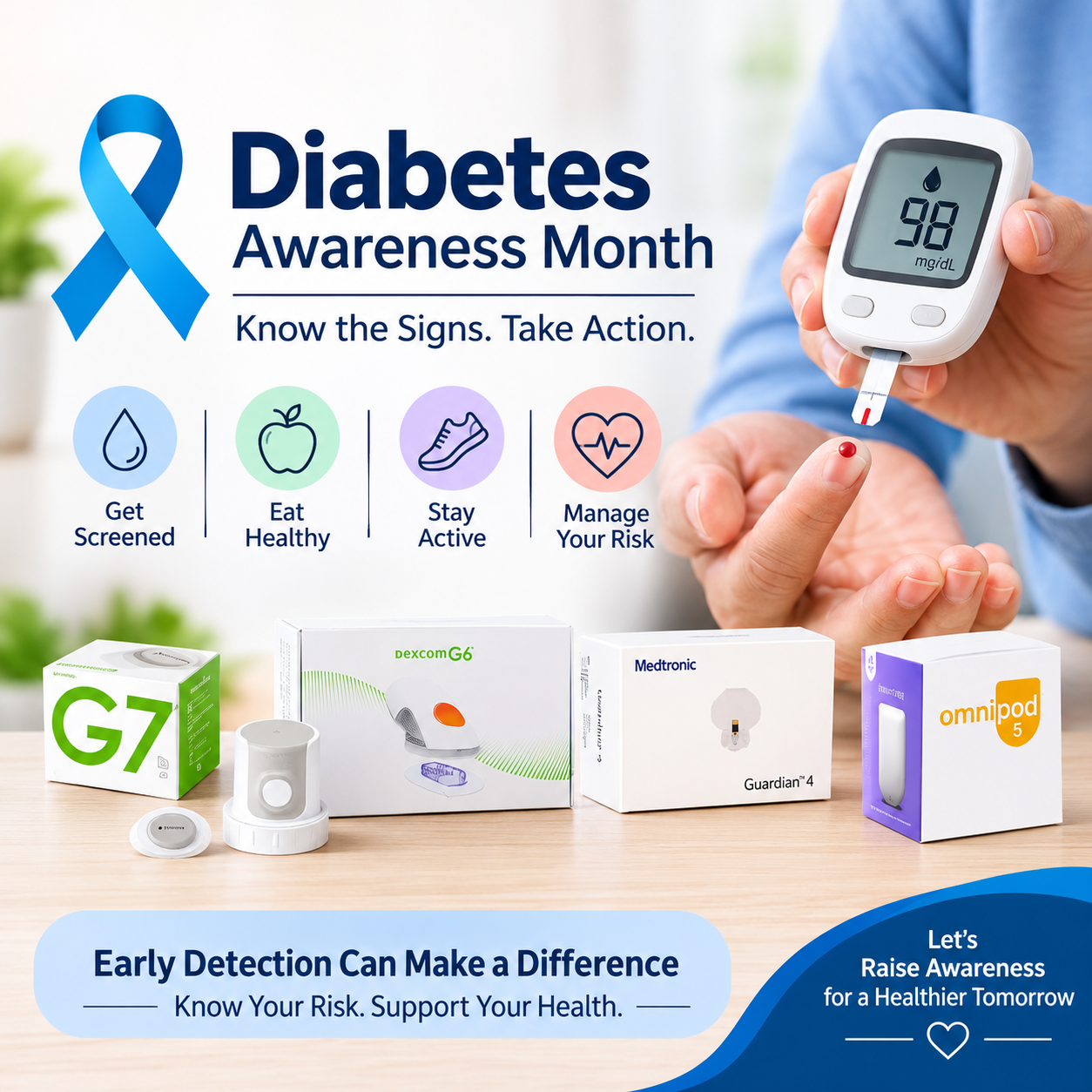
November is observed as Diabetes Awareness Month, an opportunity to learn more about diabetes, recognize potential warning signs, and understand the importance of timely screening. Diabetes affects how the body regulates blood glucose, and some people may live with the condition for years without noticing clear symptoms.
Learning about the different types of diabetes, understanding potential risk factors, and knowing when to discuss screening with a healthcare professional can support informed health decisions. This guide covers diabetes symptoms, type 2 diabetes risk factors, early detection, and practical steps that may help reduce the risk of developing type 2 diabetes.
What Is Diabetes? Understanding the Different Types
Diabetes is a chronic metabolic condition in which blood glucose levels become elevated due to problems with insulin production, insulin action, or both. Insulin is a hormone that helps glucose enter the body's cells to be used for energy.
The three main types of diabetes include:
• Type 1 Diabetes: It is an autoimmune condition in which the immune system damages insulin-producing cells in the pancreas. People with type 1 diabetes require insulin. Type 1 diabetes can develop at any age and is often diagnosed during childhood, adolescence, or early adulthood.
• Type 2 Diabetes: Type 2 diabetes is the most common form of diabetes, accounting for approximately 90–95% of diabetes cases. It develops when the body becomes less responsive to insulin and cannot produce enough insulin to maintain normal blood glucose levels.
• Gestational Diabetes: This type of diabetes develops during pregnancy in someone who did not previously have diabetes. It requires appropriate monitoring and medical care.
Common Signs and Symptoms of Diabetes
Diabetes symptoms can develop gradually or appear more quickly, depending on the type of diabetes. Some common warning signs include:
• Frequent Urination: Needing to urinate more often than usual, including at night.
• Increased Thirst: Feeling unusually thirsty, sometimes alongside frequent urination.
• Unexplained Weight Loss: Losing weight without intentionally changing eating habits or activity levels.
• Increased Hunger: Feeling hungry more frequently, even after eating.
• Persistent Fatigue: Experiencing unusual tiredness or reduced energy.
• Blurred Vision: Noticing temporary changes in vision associated with elevated blood glucose.
• Slow-Healing Wounds: Cuts or sores taking longer than expected to heal.
Some people with type 2 diabetes experience few or no noticeable symptoms. These signs are not specific to diabetes, so appropriate medical testing is necessary.
Risk Factors for Type 2 Diabetes
Several factors can increase the likelihood of developing type 2 diabetes. Some are related to personal or family history, while others involve lifestyle or existing health conditions.
• Family History: Having a parent or sibling with type 2 diabetes increases risk.
• Age: Risk generally increases with age, although type 2 diabetes can develop in younger people.
• Excess Body Weight: Overweight or obesity, particularly excess abdominal fat, is associated with increased risk.
• Physical Inactivity: Limited regular physical activity can contribute to insulin resistance.
• Prediabetes: Blood glucose levels above normal but below the diabetes threshold indicate an increased risk of type 2 diabetes.
• History of Gestational Diabetes: Having gestational diabetes during pregnancy increases the likelihood of developing type 2 diabetes later.
Understanding these factors can help individuals discuss their personal risk with a healthcare professional.
Why Early Detection and Diabetes Screening Matter
Type 2 diabetes and prediabetes can develop without noticeable symptoms. Screening, when recommended by a healthcare professional, can help identify elevated blood glucose levels and determine whether further medical evaluation is necessary.
Common screening methods include:
• A1C Test: This blood test measures average blood glucose levels over approximately two to three months.
• Fasting Plasma Glucose Test: This test measures blood glucose levels after a person has fasted for at least eight hours.
• Oral Glucose Tolerance Test: This test measures blood glucose levels before and after a person drinks a standardized glucose solution to assess how the body processes glucose.
Screening recommendations depend on age, individual risk factors, symptoms, and medical history. Home blood glucose meters and continuous glucose monitoring (CGM) devices are useful for monitoring glucose levels but are not intended to diagnose diabetes or prediabetes.
Diabetes Prevention Tips: Reducing Type 2 Diabetes Risk
Although not all risk factors can be changed, certain lifestyle habits may help reduce or delay the risk of developing type 2 diabetes.
• Choose Balanced Meals: Include vegetables, whole grains, lean proteins, and fiber-rich foods while limiting sugary drinks and highly processed foods.
• Stay Physically Active: Regular physical activity can improve insulin sensitivity and support overall metabolic health.
• Manage Body Weight: For individuals with overweight or obesity, modest weight loss may help lower type 2 diabetes risk.
• Avoid Smoking: Quitting smoking supports overall health and may help reduce diabetes-related risk.
• Seek Professional Guidance: People with prediabetes or other risk factors can discuss individualized prevention strategies with a healthcare professional.
These diabetes prevention tips apply primarily to type 2 diabetes. Type 1 diabetes cannot currently be prevented through routine lifestyle changes.




Explore Health Monitoring Essentials at Pharmalynk
This Diabetes Awareness Month, take a proactive approach to your health by understanding diabetes risk factors, recognizing warning signs, and seeking appropriate screening when recommended.
Pharmalynk offers a range of health monitoring devices, personal-care products, and everyday wellness essentials for individual and household needs. Explore our collection to discover products that may complement your everyday health and wellness routines.
Medical Disclaimer: This article is intended for general educational and informational purposes only and should not be considered medical advice, diagnosis, or treatment. The information provided does not replace consultation with a qualified healthcare professional. Always seek professional medical guidance regarding diabetes symptoms, screening, diagnosis, and treatment decisions.





November is observed as Diabetes Awareness Month, an opportunity to learn more about diabetes, recognize potential warning signs, and understand the importance of timely screening. Diabetes affects how the body regulates blood glucose, and some people may live with the condition for years without noticing clear symptoms.